
Latest changes to PNRR grants for the digitalisation of SMEs in Romania
The programme for the digitalisation of SMEs in Romania, funded through the National Recovery and Resilience Plan (PNRR), continues to be a major opportunity for small and…
Todos & Company editorial team · EU funding consultancy since 2006
The context of PNRR funding for SME digitalisation
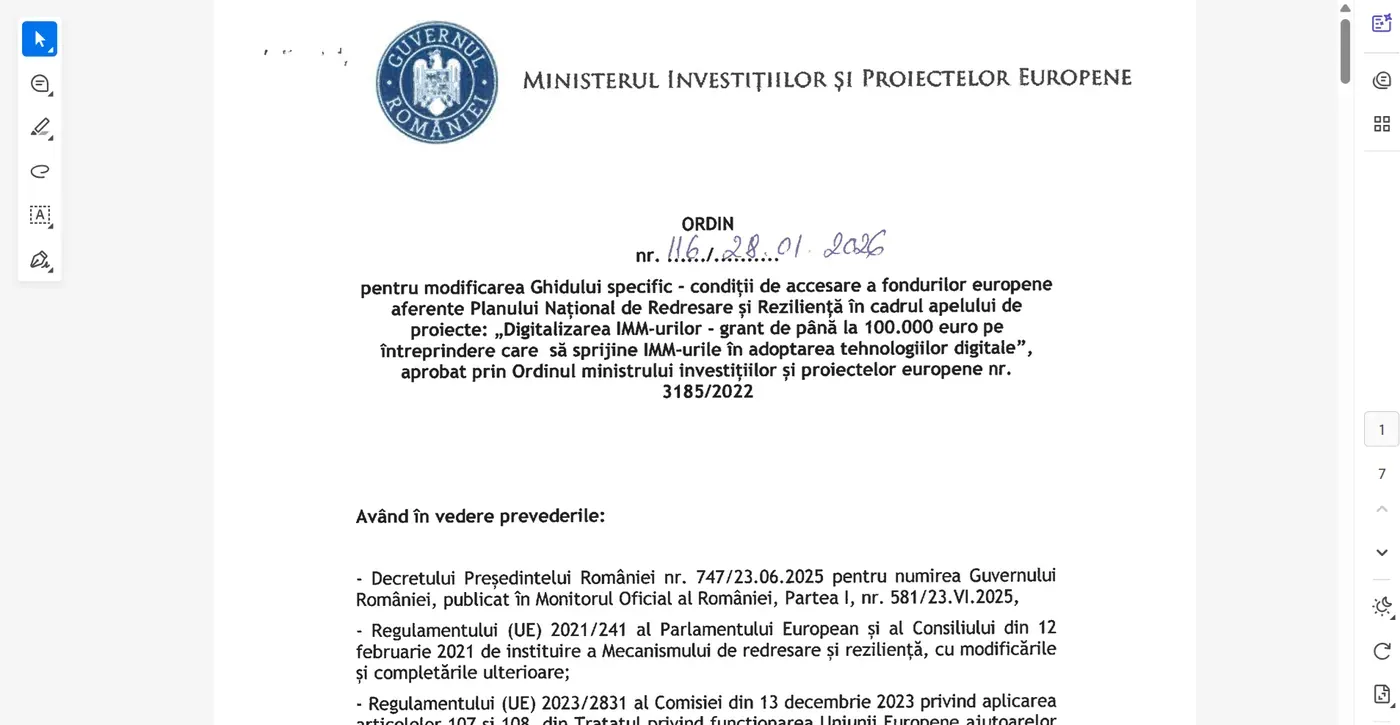
Romania's SME digitalisation programme, funded through the National Recovery and Resilience Plan (PNRR), remains a major opportunity for small and medium-sized enterprises that want to strengthen their long-term competitiveness. Recently, the Ministry of Investments and European Projects (MIPE) approved, through Order 116/2026, an important amendment to the Applicant's Guide, thereby reinforcing the application framework for grants of between 20,000 and 100,000 euro per project. This funding scheme dates back three years and its main aim is to accelerate digital transformation in companies through investment in modern technologies and innovative IT solutions.
Who the eligible beneficiaries are and what support they can receive
The grants are intended exclusively for SMEs with their registered office and a place of business in Romania, from various economic sectors, with the exception of certain activities expressly excluded in the guide (for example, financial and banking activities or gambling). To be eligible, applicants must demonstrate the economic sustainability of the business and its capacity to implement the proposed technical project. The funding covers the purchase of digital equipment (hardware, software), IT consultancy services, and the development of applications and digital solutions that increase the efficiency of internal processes, as well as investment in data security or digital marketing.
What changed under Order 116/2026?
The recent amendment to the Applicant's Guide aims to adapt the technical and financial requirements to the current needs of the business environment, as well as to the clarification proposals received during implementation over the past few years. The changes include an extended list of eligible equipment and services, adjustments to the fund reimbursement plan, clarification of the project implementation and reporting period, and new evaluation criteria to widen access for innovative companies with high development potential. The official project implementation period has been set out in more detail so as to provide a realistic and feasible framework for the SMEs that apply.
The impact of the changes on the Romanian business environment
These adjustments come at a time when digital transformation has become imperative for the survival and competitiveness of SMEs on the European and global market. PNRR grants provide a significant source of non-refundable capital, which can substantially reduce the risks and initial investment involved in digitalisation. In addition, easier access to funds encourages the modernisation of digital infrastructure, higher productivity and expansion into new markets. SMEs that invest now in high-performing IT solutions will be able to automate processes, improve the customer experience and adapt their offering to the demands of the digital market, turning the potential of this funding into a clear competitive advantage.
Practical recommendations for entrepreneurs
To avoid missing this opportunity, interested companies must prepare their application file thoroughly, following the updated requirements in the amended guide closely. The documentation must include financial statements, a business plan adapted to the digitalisation investment, quotes for equipment and services, and the project implementation strategy. It is important to check the eligibility of costs carefully and to respect the submission and reporting deadlines. I also recommend consulting a specialist consultant to optimise the project and avoid common mistakes in the application process. Entrepreneurs must also be prepared for the post-grant monitoring phase, which involves periodic reporting and possibly inspection visits from the authorities.
The continuous review of the guide and the greater flexibility of the funding schemes are signs that the authorities are trying to respond as well as possible to the real needs of SMEs. By taking advantage of these grants and the new conditions, companies can accelerate their transition to digital and build more resilient businesses, adapted to the challenges of an increasingly digital economy.
Want to find out what non-refundable funding you can access?
The Todos Company team helps you with the whole process: from checking eligibility and calculating your score, to preparing the application file and submitting the project.