DRRM 2026 funding for the Republic of Moldova: 53 approved projects, up to 500,000 lei
The April DRRM call window was suspended by the court; the June one ended with 53 projects admitted and 245 rejected. Funding ranges from 24,000 to 500,000 lei; no new call window has been announced.
Todos & Company editorial team · EU funding consultancy since 2006
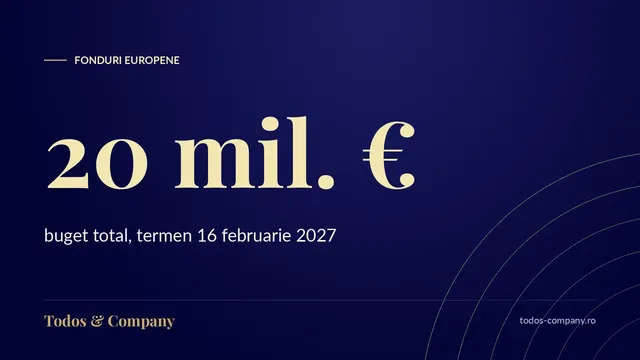
In 2026 the Department for Relations with the Republic of Moldova (DRRM) closed two call windows for non-refundable funding for projects aimed at citizens of the Republic of Moldova, but only one produced results. The 9 April – 3 May call window was suspended by a ruling of the Bucharest Court of Appeal, while the 10–21 June call window ended with 53 projects admitted, with funding of between 24,000 and 500,000 lei, and 245 projects rejected. At the date of this article, DRRM has not announced a new call window or a calendar for 2027.
In brief
- Programme: DRRM 2026 non-refundable funding for projects benefiting citizens of the Republic of Moldova (culture, media, education, civil society, spirituality and tradition).
- Authority: the Department for Relations with the Republic of Moldova, Government of Romania, under Law no. 321/2006 and Law no. 299/2007.
- Beneficiaries: associations, foundations, religious organisations, NGOs, PFAs (sole traders) and legal entities under public or private law, from Romania and from abroad.
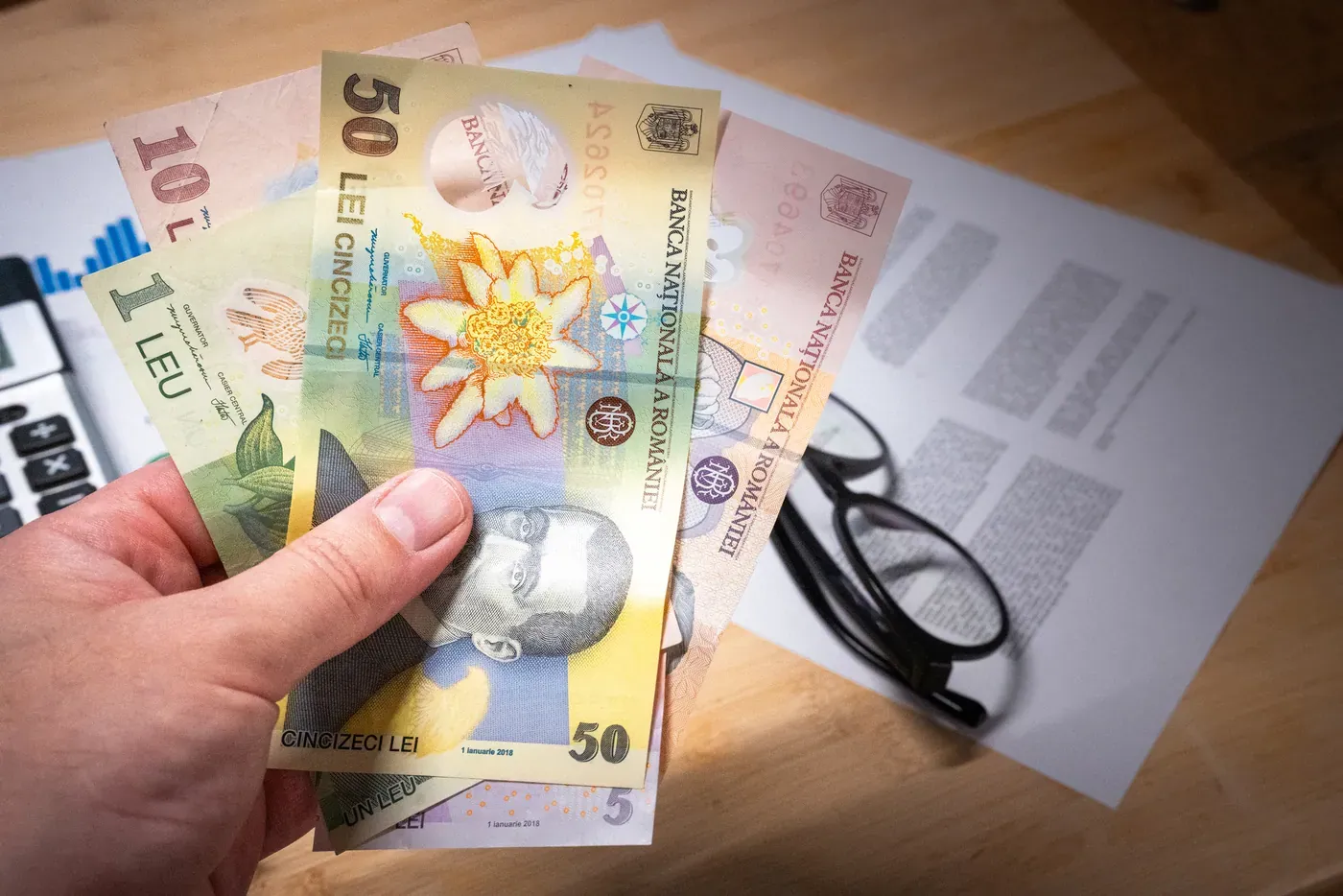
- Value per project: the guide sets no ceiling; in the June call window, the approved amounts ranged from 24,000 to 500,000 lei; own contribution of at least 5% of the funding requested.
- Submission period: 9 April – 3 May 2026 (call window suspended by the court) and 10–21 June 2026 (call window closed).
- Status: both call windows closed; the results of the June call window were published on 16 July, appeals were resolved on 30 July; no new call window announced.
What happened to the April–May call window?
On 9 April 2026 DRRM opened the first call window of the year, with submission by e-mail until 3 May, 23:59. On 26 May the department announced the suspension of this call window pursuant to Bucharest Court of Appeal Decision no. 905/2026 of 21 May 2026, which suspended the enforcement of the funding guide approved by State Secretary Order no. 23/2026. All evaluation, selection and contracting procedures were halted "until further legal provisions".
On 3 June, DRRM published clarifications: whether the first call window continues or is cancelled depends on the final ruling of the court, and the department cannot estimate a timeframe. Applications submitted in April–May are not transferred to the new call window and have no effect there. Anyone seeking funding had to apply again, with complete documentation, under the new guide. At this date, the DRRM website contains no later announcement about the fate of the first call window.
What did the June call window fund?
The second call window was launched on 10 June 2026, after a public consultation on the guide that ended on 8 June, and accepted applications until 21 June, 23:59, in JPG or PDF format, by e-mail. The results appeared on 16 July: 53 projects admitted and 245 rejected.
The list of admitted projects shows who actually succeeds at DRRM. The largest amount, 500,000 lei, went to an Orthodox parish in Cahul, for painting the cathedral. A media company received 450,000 lei, and Open SRL received 420,000 lei for the project "Romania and the Republic of Moldova: Romanian Identity, European Identity". A commune town hall in the Republic of Moldova obtained 350,000 lei for an early education project, "Alexandru Ioan Cuza" University of Iași received 159,268 lei for a European education programme in schools in the Republic of Moldova, and the "Constantin Brâncuși" Folk Arts School of Târgu Jiu received 96,640 lei for crafts. The smallest funding was 24,000 lei, for a dramaturgy workshop.
The beneficiaries are a mixed group: associations and foundations, parishes, town halls, universities and commercial companies. For companies, the most accessible field proved to be the media: publications, news production and online platforms for audiences in the Republic of Moldova.
Why were 245 projects rejected?
The reason that appears most often in the list of rejected projects is worded identically: "The documents do not comply with the conditions set out in Chapter 3.1 'Documents required at the project evaluation stage' of the 2026 Applicant's Guide". Next come applications marked "Incomplete", a few marked "Ineligible", and projects that passed the administrative check but did not reach the score threshold.
The guide is explicit: an incomplete application is rejected without evaluation and without the right of appeal. Appeals submitted after the results, within 5 working days, were all rejected on 30 July. The erratum of 31 July confirms the admission threshold: 70 points out of 100, and projects with 61 or 68 points fell below the threshold. Some of the appellants relied on the provisions of the April guide, an act suspended by the court, which could not be taken into account.
How does DRRM funding work?
- Own contribution: at least 5% of the value of the funding requested, proven by a bank statement or a declaration.
- Payment: DRRM may grant an advance of 50% of the approved funding; the remainder is reimbursed on the basis of supporting documents.
- Reporting: the consolidated statement of expenses and the final report must be submitted within 30 days of the last activity at most, but no later than 15 November 2026.
- Evaluation: mandatory yes/no criteria (complete application, eligibility, relevance to the link with the Republic of Moldova) and ranking criteria worth up to 100 points, for example 15 points for clarity of objectives and 15 for the promotion of the Romanian language and culture.
- Expense ceilings: in Romania, accommodation 265 lei per person per day and meals 85 lei per day; fuel at most 7.5 litres per 100 km for own vehicles.
Eligible projects are described in Annex 2 of the guide: from publishing and distributing publications and audiovisual programmes in Romanian, to cultural events, restoration of monuments, equipping schools, courses and scholarships, repair and equipping of churches, through to equipping the premises of organisations and rule-of-law programmes.
What this means for your business
Our recommendation: if your company, PFA or NGO works with audiences in the Republic of Moldova, prepare your application well in advance for the next call window, even though it has not been announced. In 2026, the guide was put to public consultation on 4 March and the call window opened on 9 April, with a 24-day submission window; the June call window lasted only 11 days. Anyone who starts the documentation after the announcement will not have enough time.
The main pitfall is administrative, not substantive: more than half of the rejections come from documents that do not comply with Chapter 3.1 of the guide. Check the certificate of good standing (no older than 30 days), the tax certificates, the declarations in Annexes 4 and 5 and the project-specific documents in Annex 11. The budget must comply with the expense rules and be clearly linked to the activities, because both are scored separately.
The programme suits media and communication companies, publishers, audiovisual producers, training providers and organisations with partners in the Republic of Moldova. It does not suit productive investments or projects without identifiable beneficiaries across the Prut. You can check in advance which other schemes suit you through the eligibility check.
Frequently asked questions
Can I still submit a project to DRRM in 2026?
No. The 10–21 June 2026 call window has closed, the results and appeals were resolved in July, and the first call window of April–May remains suspended by the ruling of the Bucharest Court of Appeal. DRRM has not announced a new call window for 2026 or a calendar for 2027.
What happens to the projects submitted in April–May 2026?
According to DRRM's clarifications of 3 June, the procedures are suspended until the final ruling of the court, and the department could not estimate a timeframe. Applications from the first call window were not transferred automatically to the June call window; applicants had to submit again.
Can companies apply, not just NGOs?
Yes. The guide admits legal entities under public or private law and PFAs, from Romania or from abroad, provided that the project benefits citizens of the Republic of Moldova. The list of projects admitted in June 2026 includes several commercial companies, especially in the media field. Unauthorised natural persons are not eligible.
How much can I request and how much must I contribute?
The guide sets no ceiling per project; funding is granted within the limit of the allocated budget. In the June 2026 call window, the approved amounts ranged from 24,000 to 500,000 lei. The applicant proves an own contribution of at least 5% of the amount requested, and DRRM may pay an advance of 50%, with the remainder reimbursed on the basis of documents.
What is the minimum score to be admitted?
The DRRM erratum of 31 July 2026 confirms the threshold of 70 points out of 100. Before scoring, the application must pass the mandatory criteria and the document check in Chapter 3.1; incomplete applications are rejected without evaluation and cannot be appealed.
Official sources
- DRRM – announcement of the 9 April – 3 May 2026 call window
- DRRM – suspension of the 2026 funding call window (26 May 2026)
- DRRM – clarifications on the 2026 funding call windows (3 June 2026)
- DRRM – funding call window 10–21 June 2026
- DRRM – results of the evaluation of projects from the June 2026 call window
- List of admitted projects (PDF)
- List of rejected projects (PDF)
- DRRM – results of the appeals (30 July 2026)
- DRRM – corrigendum to the appeal results (31 July 2026)
- DRRM – documents required for awarding non-refundable funding (guide, criteria, annexes)
- DRRM 2026 applicant's guide (PDF)
Information checked on 27 October 2026. Conditions may be changed by the managing authority — check the guide in force before you submit.