Creative Europe MEDIA: €7 million for film education and audiences, deadline 2 March
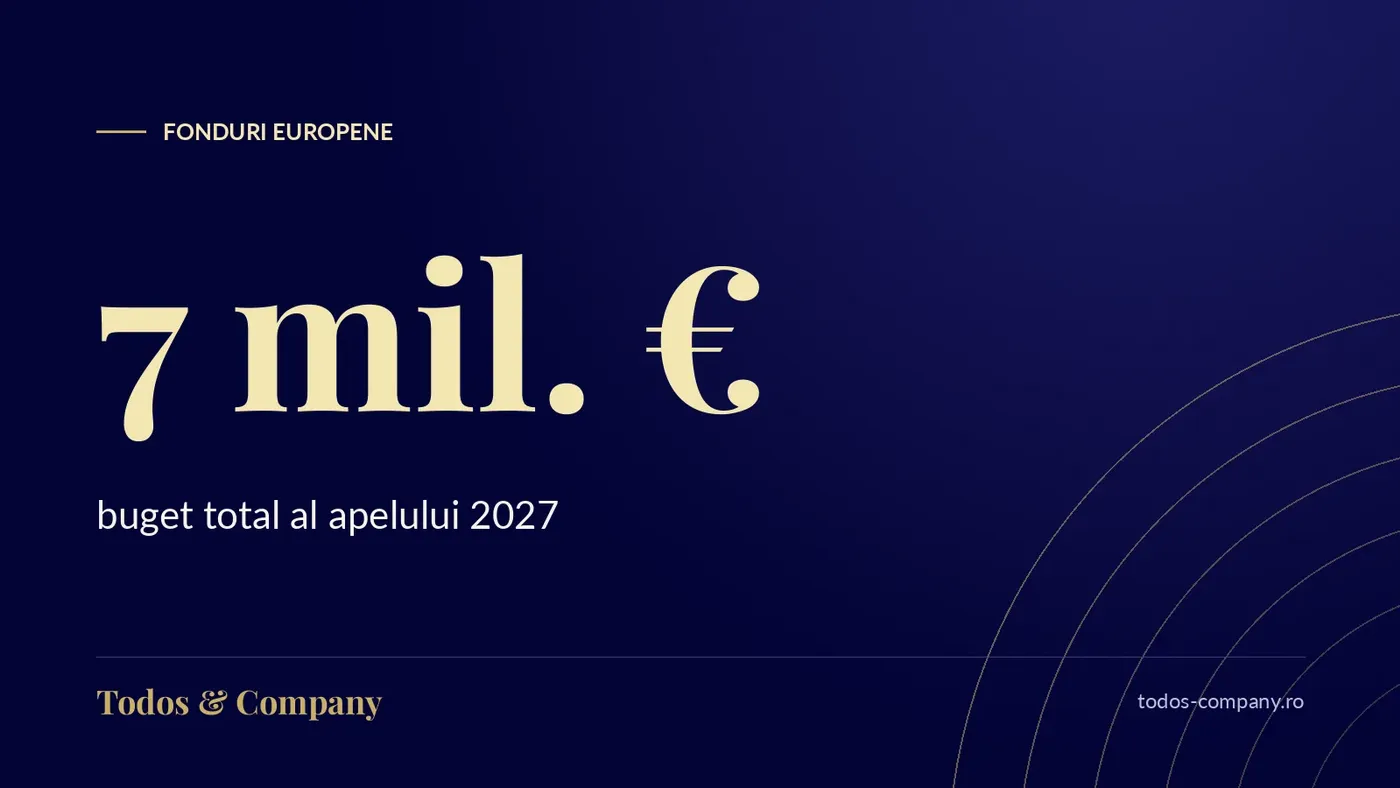
The MEDIA call "Audience Development and Film Education" 2027 has €7 million for pan-European film education and audience development projects. Co-financing 70%, minimum 5 countries, deadline 2 March 2027.
Todos & Company editorial team · EU funding consultancy since 2006
 Programme sheet · Call window open Creative Europe MEDIA 2027 — Audience Development and Film Education (CREA-MEDIA-2027-AUDFILMEDU) Deadline: 2 March 2027
On 30 September 2026 the European Commission opened the Creative Europe MEDIA call "Audience Development and Film Education" (CREA-MEDIA-2027-AUDFILMEDU), with a budget of 7 million euro for pan-European film education and European film audience development projects. Legal entities from EU Member States and countries associated with Creative Europe can apply, alone or in consortia, with projects that reach at least 5 countries participating in the MEDIA strand. The submission deadline is 2 March 2027, 17:00 (Brussels time), and the grant covers up to 70% of eligible costs.
In brief
- Programme: Creative Europe 2021–2027, MEDIA strand, call CREA-MEDIA-2027-AUDFILMEDU "Audience Development and Film Education"
- Authority: European Commission, through the European Education and Culture Executive Agency (EACEA), submission via the Funding & Tenders portal
- Beneficiaries: legal entities (not natural persons) established in EU Member States or in countries associated with the programme; a single applicant or a consortium of at least 2 beneficiaries
- Total budget: €7,000,000
- Value per project / intensity: funding rate of 70% of eligible costs; budget-based grant (actual costs); no ceiling per project is specified in the call document
- Submission period: 30 September 2026 – 2 March 2027, 17:00 CET
- Status: call open; evaluation March–August 2027, results in September 2027, contract signing in December 2027
What does this call fund?
The stated aim is to stimulate audience interest in European films and increase audience knowledge of them, with an explicit focus on young audiences. The Commission wants projects that strengthen pan-European cooperation in audience development and film education and that have an impact beyond a single country.
The fundable activities, as set out in the call document, are:
- audience-oriented events and innovative or cross-border film education initiatives;
- programmes dedicated to film heritage, with heritage films defined as those produced at least 10 years ago;
- cooperation between film institutions and online platforms, including the use of digital tools to reach audiences;
- actions in areas where cinema infrastructure is poorly developed, referred to in the guide as "cinema deserts".
The project must start from a sound, evidence-based analysis of audience or market needs and propose quantifiable targets. The call document also requires strategies for a sustainable and environmentally responsible industry, as well as for gender balance, inclusion and diversity.
Who can apply?
Legal entities established in an EU Member State (including overseas territories) or in a country associated with Creative Europe are eligible. Romania is a Member State, so Romanian organisations are eligible without additional country conditions. Natural persons cannot apply, except for self-employed persons (PFA) carrying out an independent activity.
Both single applicants and consortia of at least 2 beneficiaries are accepted. Whatever the structure, the project must reach audiences in at least 5 countries participating in the MEDIA strand, and at least 50% of the films and audiovisual works used in the project must come from countries participating in MEDIA.
The call document does not restrict the type of organisation. In practice, the suitable profile is that of cinemas, festivals, film schools, cultural associations, VOD platforms, film museums and archives, or education companies, as long as they can demonstrate partners and audiences in at least 5 countries.
How much is funded and for how long?
The grant covers up to 70% of eligible costs, with the remainder being own contribution or other sources. The grant is "budget-based": actual eligible costs are reimbursed, not the budgeted amounts, and the project cannot generate a profit (revenue plus EU funding cannot exceed costs). The call document sets no ceiling per project and does not state the estimated number of projects; the Commission reserves the right not to award the entire budget if proposals do not reach the required quality.
Projects normally last between 24 and 36 months. According to the indicative timetable, contracts are signed in December 2027, so activities would realistically begin in early 2028.
How are projects assessed and submitted?
Submission is exclusively electronic, via the Funding & Tenders portal, by 2 March 2027, 17:00 (Brussels time). Part B of the proposal (the technical description) is limited to 70 pages.
The award criteria, with the scores from the call document:
- Relevance (45 points): the potential to engage audiences, evidence-based needs analysis, European partnerships, and strategies for sustainability, gender balance and inclusion;
- Quality of content and activities (35 points): overall quality, feasibility, and the innovative or cross-border nature of the approach;
- Project management (10 points): the distribution of roles and the experience of the partnership;
- Dissemination (10 points): the promotion strategy and the methods for collecting audience data.
The minimum threshold for funding is 70 points out of 100.
What this means for your business
Our recommendation: this is not a call for an organisation working alone at local level. The 5 mandatory countries and the 45 points for relevance mean that European partners and audience analysis make the difference, not the artistic idea itself. If you do not already have relationships with festivals, cinemas or film schools in other countries, the next four months should be used to build them, with letters of intent and clear roles.
Common pitfalls we see in projects like these:
- an audience needs analysis written from impressions, without data (tickets sold, surveys, viewing statistics); evaluators require evidence;
- vague targets ("increasing interest") instead of measurable indicators by country and age group;
- unsecured 30% co-financing: with a grant based on actual costs, a lack of liquidity blocks activities;
- too high a share of non-European films, breaching the 50% rule;
- ignoring the requirements on environment, gender and inclusion, which are explicitly scored under relevance.
The call suits organisations that already have a film education or audience programme and want to expand it across Europe for 2–3 years, with a budget that justifies the effort of a proposal of up to 70 pages. If you are not sure you have the right profile, use the eligibility check or speak to a consultant before mobilising partners.
Frequently asked questions
Can a single organisation from Romania apply?
Yes, the call document allows single applicants. Even so, the project must reach audiences in at least 5 countries participating in the MEDIA strand, so a single applicant needs real activities in several countries, usually through collaborators or subcontractors. In practice, a consortium of at least 2 beneficiaries from different countries is more convincing under the relevance criterion.
What is the co-financing rate and what does a "budget-based" grant mean?
The EU funds up to 70% of eligible costs. The grant is calculated on the basis of actual costs incurred and proven, not the amounts in the initial budget, and the project cannot generate a profit. The difference of at least 30% must be covered from own resources, project revenue or other sources.
When do we apply and when will we find out the result?
The deadline is 2 March 2027, 17:00, Brussels time, on the Funding & Tenders portal. The indicative timetable provides for evaluation between March and August 2027, notification of applicants in September 2027 and signing of grant agreements in December 2027.
What does the 50% rule for films mean?
At least 50% of the films and audiovisual works used in the project must come from countries participating in the MEDIA strand. A summer school whose programme is dominated by American films, for example, does not meet the condition, regardless of its pedagogical quality.
Is there a grant ceiling per project?
The call document sets no maximum value per project and does not state how many projects will be funded. The total budget is 7 million euro, and the Commission may decide not to award it in full if proposals do not reach the threshold of 70 points.
Official sources
- Funding & Tenders portal — topic CREA-MEDIA-2027-AUDFILMEDU, Audience Development and Film Education
- Official call document CREA-MEDIA-2027-AUDFILMEDU, European Commission
Information checked on 19 October 2026. Conditions may be changed by the managing authority — check the guide in force before you submit.