
Tax credit and the fixed asset threshold: key changes for businesses from 2026
The Ministry of Finance is proposing an important amendment through the recent draft law on economic recovery, which will affect how companies manage their investments in…
Todos & Company editorial team · EU funding consultancy since 2006
Higher entry value for fixed assets – impact and opportunities
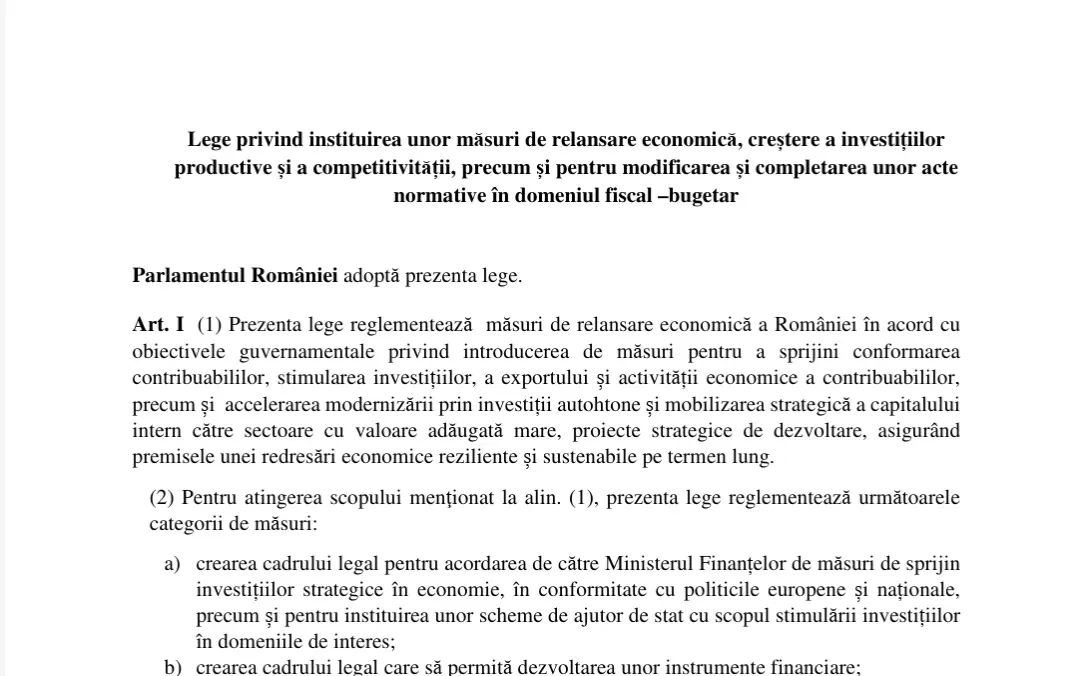
The Ministry of Finance is proposing an important change through the recent draft law aimed at economic recovery, which will affect how companies manage their investments in fixed assets. The minimum threshold for recognising an item as a fixed asset is set to rise from 2,500 lei to 5,000 lei, a change that will have significant effects on the cash flows and taxation of Romanian businesses.
The current threshold of 2,500 lei is very low, which means that many companies record numerous assets as fixed assets, and therefore as tax-depreciable. However, this system sometimes complicates accounting and tax management, generating a larger volume of documentation and tax checks. By doubling the threshold, management is expected to be simplified, reducing the number of low-value items classed as fixed assets and, with it, the associated administrative effort.
At the same time, this change will force companies to analyse the nature of their investments more carefully, encouraging them to choose assets of greater value with a clearer impact on operational and productive activity.
Tax credit – a revised tax instrument to stimulate investment
The draft law also introduces an essential component in the form of a tax credit, designed to reduce the tax burden for companies that invest in expansion and modernisation. This tax credit is a form of tax incentive that can be used to cover part of the profit tax owed, in amounts that reflect the investments made.
Thus, companies that choose to reinvest in fixed assets will be able to benefit, from 2026, from tax reductions that support their cash flow and their medium- and long-term growth plans. The tax credits aim not only to facilitate access to resources, but also to contribute to greater competitiveness by modernising the stock of equipment and technology.
In practice, the tax credit will be granted on the basis of precise criteria set out in the Fiscal Code, and companies will have to support the documentation relating to their investments in order to claim this facility.
Eligible beneficiaries – who really benefits from the new measures
At the heart of these tax changes are mainly SMEs, but also medium-sized and large companies that invest in fixed assets which contribute to increasing productive capacity. The sectors targeted will be above all industry, technology, agriculture and services, where investment in fixed assets plays a critical role in competitiveness.
It is essential that companies are properly informed and assess whether their planned investments exceed the new threshold of 5,000 lei, so that they can benefit from the options offered by the tax credit. In addition, you will need to monitor closely the new provisions on the types of assets accepted and the method of calculating the tax credit, in order to maximise the tax advantages in line with your business strategy.
What documents and steps companies should prepare to access the benefits
Preparing for the new measures starts with a review of investment and accounting policies. It is very important that companies keep clear and rigorous records of the assets purchased, with the complete documentation relating to the purchase process, invoice and receipt, so that they can justify the value of their fixed assets to the tax authorities.
It is advisable to consult tax and accounting specialists in good time to implement correctly the criteria that accompany the tax credit. Internal procedures will probably need to be adapted for approving and tracking investment projects that exceed the new threshold.
Companies should also follow the legislative process for the final adoption of these changes, because before they actually take effect from 2026, important clarifications or adjustments may emerge that could affect how they are applied.
What this tax policy could mean for businesses in the long term
These Fiscal Code measures will contribute to a more rational and sounder investment structure, supporting competitiveness at home and abroad. By facilitating the tax credit and setting a more realistic threshold for fixed assets, the Government is encouraging a healthier business environment, in which companies can optimise their cash flows and plan their development sustainably.
Romanian entrepreneurs should take advantage of this opportunity to recalibrate their tax and investment strategies, get informed in good time and prepare the necessary documentation. In this way they will turn the legislative changes into an important competitive advantage, strengthening their market position and reducing tax risks.
Want to find out what non-refundable funding you can access?
The Todos Company team helps you with the whole process: from checking eligibility and calculating your score, to preparing the application file and submitting the project.